Radiocarbon dating cost in 2026: what AMS labs actually charge
Published per-sample prices from nine laboratories in five countries, the surcharges that hit lake sediment, what a rush costs, and what ten or twenty dates on a pollen core add up to.
A single AMS radiocarbon date on plant remains, charcoal or sediment costs about £315–£380 at the UK university laboratories that publish prices, €410 at Groningen, 3,500–3,900 SEK in Sweden, US$450 at the University of Georgia and NZ$800 at Waikato, all before VAT or GST. Rush service adds 50–78% where a figure is published, low-carbon sediment and bone attract surcharges, and non-academic work can cost more: Oxford charges £500 per sample for it. Those are list prices read from each laboratory’s own page on 23 November 2026, in each laboratory’s own currency. We have not converted currencies, because the exchange rate on the day you pay is the one that matters.
This page is written for people who date pollen records: students budgeting a thesis, archaeologists costing a project design, and anyone writing a grant line called “chronology”. It lists what laboratories publish, what is and is not included, how much a rush costs, and what a set of ten or twenty dates on one core adds up to. Where a laboratory does not publish a figure, we say so instead of guessing.
Published prices, lab by lab
The table gives the price for one standard AMS determination on “ordinary” organic material (plant macrofossils, wood, charcoal, peat, sediment) at the smallest batch size, which is the worst case. Bone is covered further down. Laboratories are listed by country, not by rank: they differ in turnaround, minimum sample size, pretreatment and who they accept work from.
| Laboratory | Country | One sample, standard service | What the page says about it | Tax |
|---|---|---|---|---|
| Oxford Radiocarbon Accelerator Unit (ORAU) | UK | £380 (1–4 archaeological or environmental samples) | £500 for samples “not for academic research”; £100 for samples that fail through no fault of the lab | excl. VAT |
| SUERC Radiocarbon, Glasgow | UK | £325 (fewer than 10; bone collagen £345) | For samples received from 1 August 2023; failed samples not charged | excl. VAT |
| 14CHRONO Centre, Belfast | UK | £315 non-bone (0–24 samples; bone £345) | 2026 prices; humic/humin pairs £445; failed non-bone samples £0 | excl. VAT |
| Centre for Isotope Research (CIO), Groningen | Netherlands | €410 (plant material, wood, charcoal) | 2026 rates; water €350, CO2 ampoules €295; €75 if pretreatment yields too little carbon | excl. 21% VAT |
| Tandem Laboratory, Uppsala | Sweden | 3,500 SEK | “The same price per sample applies, regardless of material”; includes all pretreatment and stable isotopes; no bulk discount | excl. VAT |
| Radiocarbon Dating Laboratory, Lund | Sweden | 3,900 SEK | Basic price for one normal date on any material; several pretreatments are 600 SEK each | excl. VAT |
| Center for Applied Isotope Studies (CAIS), University of Georgia | USA | $450 (charcoal, wood, seeds, sediment) | Collagen and bioapatite $500; combustion-ready samples $400; graphite $120 | not stated |
| Waikato Radiocarbon Dating Laboratory | New Zealand | NZ$800 (1–4 samples) | Price list “as at 1/1/25”; includes standard pretreatment | NZ customers add 15% GST |
| Rafter Radiocarbon Laboratory, GNS Science | New Zealand | NZ$1,100 (organic carbon, 1–5 samples) | From the 2025–26 list, marked valid until 30 June 2026; check for a newer list before budgeting | excl. GST |
Source: each laboratory’s price page, linked in the first column, accessed 23 November 2026. Prices are per sample in the laboratory’s own currency. They are list prices and can change without notice; confirm before you submit.
Three things stand out. First, the UK laboratories sit within £65 of each other for a single non-bone sample (£315 to £380). Second, two Swedish laboratories charge one price whatever the material, which makes budgeting simple. Third, the spread between laboratories is smaller than the spread created by options: a rush, a low-carbon surcharge or a commercial rate changes the bill more than the choice of laboratory does.
Batch discounts
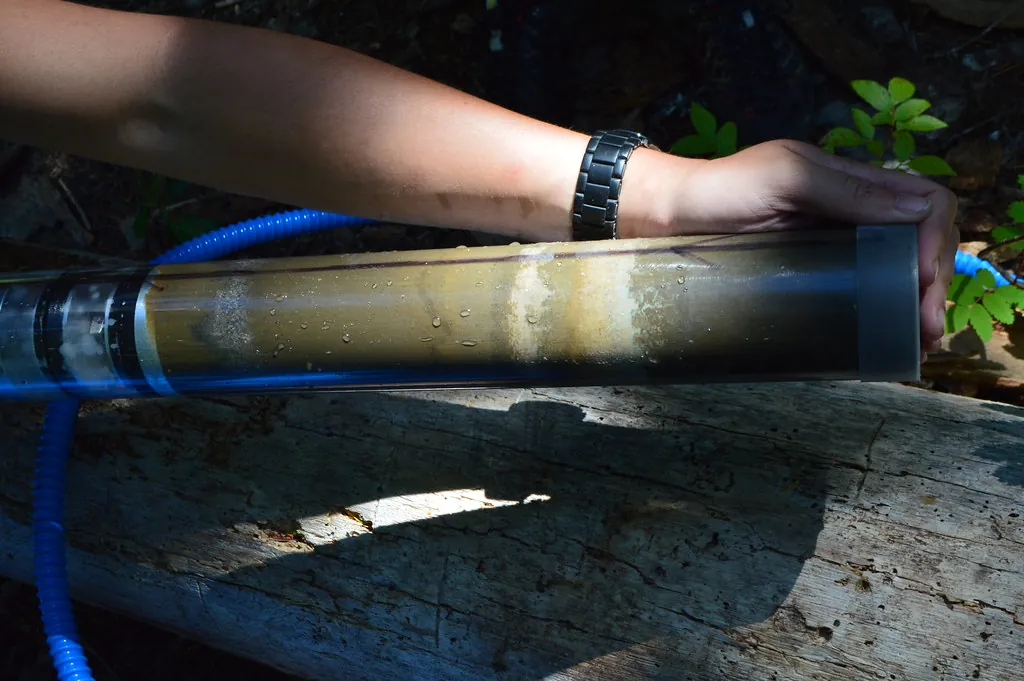
Most price lists fall as the batch grows, but by less than people expect. Oxford’s rate drops from £380 to £315, a reduction of 17%, once you send twenty or more. Groningen needs a hundred samples to move from €410 to €350, about 15%.
| Laboratory | Smallest batch | Largest published tier | Reduction (our calculation) |
|---|---|---|---|
| ORAU, Oxford | £380 (1–4) | £315 (20+) | 17% |
| CIO, Groningen | €410 (1–9) | €350 (100+) | 15% |
| Rafter, GNS Science | NZ$1,100 (1–5) | NZ$950 (11+) | 14% |
| 14CHRONO, Belfast | £315 (0–24) | 10% off for 50 or more (5% for 25–49) | 10% |
| Lund | 3,900 SEK | 10% off when 10 or more are submitted together; larger batches “further discounts”, no figure given | 10% or more |
| SUERC, Glasgow | £325 (<10) | £305 (40+) | 6% |
| Waikato | NZ$800 (1–4) | NZ$755 (5+ in one batch) | 6% |
| Uppsala | 3,500 SEK | “No bulk discount” | 0% |
Source: laboratory price pages linked above, accessed 23 November 2026. Percentages are our arithmetic on the published figures, rounded to the nearest whole number.
The practical reading: sending all the dates for a core in one batch is worth doing, mainly because it keeps them in the same measurement run and on the same invoice, but it will not halve the bill. A ten-date pollen core lands in the second tier at Oxford (£330) and Groningen (€385), not the cheapest one.
What is included and what costs extra
A “price per sample” normally covers the routine chemical pretreatment, conversion to graphite, the AMS measurement and a report with the conventional radiocarbon age. Uppsala states that its price includes “all pre-treatment and stable isotopes”; Waikato’s base charge includes standard pretreatment. Calibration to calendar years is something you can and should redo yourself with the current curve (IntCal20 covers 0–55 cal kBP), as described in our field guide to sediment coring.
The extras are where pollen projects get caught, because lake muds and organic-poor sediment are exactly the materials that attract them.
| Extra | Published charge | Laboratory | Why a palynologist meets it |
|---|---|---|---|
| Low-carbon samples (soils, lake muds) | +NZ$200 per sample | Waikato | Minerogenic late-glacial sediment, clays |
| Base-soluble fraction extraction, “required for low-organic sediments and soils” | +600 SEK | Lund | Bulk sediment dates when no macrofossils are found |
| Small samples under 0.5 mg carbon | +2,200 SEK | Lund | A single seed, a few needles |
| Humic and humin fractions dated as a pair | £445 per pair (against £315 for one non-bone date) | 14CHRONO | Peat, where the two fractions can differ in age |
| Cellulose extraction, “recommended for old wood” | +NZ$100 | Waikato | Wood near the limit of the method |
| Bone collagen | £345 against £325 (SUERC); £345 against £315 (14CHRONO); $500 against $450 (UGA); +NZ$190 gelatinisation (Waikato) | Several | Archaeological contexts sampled alongside pollen |
| High precision | +2,200 SEK (Lund, only for samples over 10 mg); +30%, minimum 5 samples (Rafter) | Lund, Rafter | Wiggle-matching, short-lived events |
| δ13C measurement as a separate item | 600 SEK (Lund); +NZ$85 with δ15N and C/N (Rafter) | Lund, Rafter | Checking the carbon source of bulk sediment |
Source: laboratory price pages linked in the first table, accessed 23 November 2026.
What happens when a sample fails
Small macrofossils sometimes dissolve in pretreatment or yield too little carbon. Policies differ, and on a core with marginal material the difference is real money:
| Laboratory | Charge for a sample that cannot be dated |
|---|---|
| SUERC, Glasgow | No charge |
| 14CHRONO, Belfast | £0 for non-bone and humic/humin samples; £30 for bone |
| CIO, Groningen | €75 if the sample was pretreated but gave insufficient carbon |
| ORAU, Oxford | £100 for samples that fail “through no fault of ORAU” |
| Uppsala | 550 SEK (“dating not possible, pre-treatment only”) |
| Waikato | Typically NZ$100 for pretreatment, or NZ$200 for pretreatment and combustion |
Source: laboratory price pages linked in the first table, accessed 23 November 2026. The other laboratories in this article do not state a failure charge on the pages we read.
Rush fees and turnaround
Only three of the laboratories we read publish a price for speed. The University of Georgia lists a separate rush column: $800 instead of $450 for charcoal, wood, seeds and sediment, with a stated turnaround of 7 days instead of 3 weeks. Lund charges 2,200 SEK on top of 3,900 SEK for “fast handling”, reported within a maximum of 6 weeks and normally 3–4. Waikato adds NZ$400 to NZ$800 for an express turnaround of 4 weeks (6 for bone). SUERC offers a faster service of about 5–7 working weeks with “limited availability” and no published price.
Standard turnaround varies far more than price does. A laboratory that quotes three weeks and one that quotes seventeen are selling different things, and for a thesis with a submission date the calendar can matter more than a £20 difference per sample.
| Laboratory | Standard turnaround | Fast option | Fast price |
|---|---|---|---|
| UGA CAIS | 3 weeks | 7 days (the page says “7 days” in the fee chart and “7 business days” in the text) | $800 instead of $450 |
| Waikato | 8 weeks on average | 4 weeks (6 for bone); contact the lab for availability | +NZ$400 |
| Lund | About 2 months, excluding lab holidays | Maximum 6 weeks, normally 3–4 | +2,200 SEK |
| SUERC | About 12–16 working weeks | About 5–7 working weeks, limited availability | On enquiry |
| CIO Groningen | 17 weeks for plant material and bone; 13 for carbonate; 12 for water | Not listed | Not listed |
| 14CHRONO | Typically 16–18 weeks | Not listed | Not listed |
Source: laboratory pages linked in the first table, accessed 23 November 2026. Oxford, Uppsala and Rafter do not state a turnaround on the price pages we read.
Academic, commercial and “price on request”
Whether you count as academic changes the price at several laboratories, and some of the best-known services publish no price at all.
- Oxford has a separate line for samples “not for academic research”: £500 per sample for any number, against £315–£380 for archaeological and environmental samples. That is 32% above the single-sample research rate (our calculation).
- The Keck Carbon Cycle AMS facility at UC Irvine prices each step separately in three columns. Adding up the four steps for an organic sample (cleaning, combustion, graphitisation, AMS measurement) gives $230 for University of California users, a total the page states itself; the same four lines add up to $345 for other not-for-profit users and $465 for commercial users (our sums of the published lines: $90 + $55 + $70 + $130, and $100 + $65 + $100 + $200). The facility accepts batches of at least 10 samples.
- The A.E. Lalonde AMS facility at the University of Ottawa states that its pricing is effective from 1 May 2026, in Canadian dollars, with one rate for Canadian academic, government, Indigenous and non-profit users and another for commercial and international users; internal university accounts get 20% off the academic rate. The figures themselves sit in a table we could not read reliably, so we do not reproduce them: see the laboratory’s pricing page.
- NOSAMS at Woods Hole says its prices are “effective as of April 1, 2025”, set with the National Science Foundation, and advises applicants to build a 2.5% annual fee increase into budgets. Per-sample figures come from its fee calculator, not a static list (NOSAMS fees).
- Beta Analytic, a commercial laboratory, does not publish prices: its prices and payment page asks you to request a quote, and notes that the invoice is generated once the lab has confirmed the sample will yield a result.
If you are a consultant or a commercial archaeology unit, ask which column you fall into before you compare lists. If you are a student, ask your supervisor whether the department has an internal rate or an existing account: internal rates, where they exist, are usually not on the public page.
University and survey laboratories that work on pollen are listed in our palynology directory, with commercial and contract laboratories in a separate section.
What a pollen-core chronology costs
There is no fixed number of dates for a pollen diagram. Bennett (1994) showed that radiocarbon ages “should be evenly spaced” and that uncertainty widens towards the ends of a sequence; in practice people date the top and base, both sides of each major change, and fill the gaps evenly. The table costs two common cases, ten and twenty dates sent as one batch, at the published batch rates. It is arithmetic on list prices, not a quote.
| Laboratory | Rate at 10 samples | 10 dates | Rate at 20 samples | 20 dates |
|---|---|---|---|---|
| 14CHRONO, Belfast | £315 | £3,150 | £315 | £6,300 |
| SUERC, Glasgow | £315 | £3,150 | £315 | £6,300 |
| ORAU, Oxford | £330 | £3,300 | £315 | £6,300 |
| CIO, Groningen | €385 | €3,850 | €385 | €7,700 |
| Uppsala | 3,500 SEK | 35,000 SEK | 3,500 SEK | 70,000 SEK |
| Lund (10% off for 10+) | 3,510 SEK | 35,100 SEK | 3,510 SEK or less | 70,200 SEK or less |
| UGA CAIS | $450 | $4,500 | $450 | $9,000 |
| Waikato | NZ$755 | NZ$7,550 | NZ$755 | NZ$15,100 |
| Waikato, all ten or twenty as low-carbon lake mud (+NZ$200 each) | NZ$955 | NZ$9,550 | NZ$955 | NZ$19,100 |
Our calculation from the published per-sample prices (sources linked in the first table, accessed 23 November 2026). Excludes VAT or GST, shipping, import inspection fees and any surcharge for small, low-carbon or failed samples.
The last row is the one to notice. On organic-poor sediment a single surcharge adds NZ$2,000 to a ten-date chronology at Waikato, a 26% increase on the base cost. The cheapest way to avoid that is in the field and at the sieve: find terrestrial plant macrofossils and you pay the base price for a better date.
These totals are also why our coring guide calls dating “usually the largest single cost of a coring project”. A chronology feeds everything downstream: the age–depth model, the zonation you draw in your pollen diagram software and the accumulation rates behind pollen influx. It is also the line that reviewers of a grant or a project design look at first.
What to send: material, size and the pollen option
The price is per sample, so the material you choose decides how much chronology you get for the money.
Minimum and preferred sizes
14CHRONO publishes one of the clearest size tables. Its figures for the materials that come out of pollen cores:
| Material | Minimum | Optimum |
|---|---|---|
| Plant macrofossils | 3–4 mg | 10 mg |
| Wood | 5 mg | 20 mg |
| Charcoal, charred seeds | 10 mg | 30 mg |
| Peat, whole | 500 mg | 1 g |
| Peat, humic acid fraction | 1 g | 2 g |
| Bulk sediment | No weight given: needs a carbon content above 2%; humic or humin extraction needs organic carbon above 10% | |
Source: 14CHRONO Centre, sample types and considerations, accessed 23 November 2026. Other laboratories set their own limits; Rafter, for example, asks for 1–3 g of sediment.
Macrofossils first, bulk sediment second
Terrestrial plant macrofossils are the preferred material in lake sediment because they took their carbon from the atmosphere and were deposited soon after death. Oswald and colleagues (2005) found AMS dates on samples as small as 0.05 mg of carbon to be reliable, but found wood and charcoal often older than other macrofossil types, “usually by several hundred years”. Bulk sediment can carry old carbon, especially in hard-water lakes, so a bulk date can cost the same as a macrofossil date and be worth less. We discuss both in the chronology section of the coring guide, and the special case of charcoal in microscopic charcoal analysis.
Dating the pollen itself
When a core has no macrofossils, pollen concentrates are the obvious alternative for a palynologist. Tunno and colleagues (2021) describe the logic: AMS dating of terrestrial macrofossils is the most common technique, but “in the absence of sufficient macrofossils, pollen concentrates represent a valuable source of dates”, provided that pollen is completely separated from other organic matter. Whether enough grains, and so enough carbon, can be obtained depends on the sediment type and pollen abundance.
The cost implication is that the laboratory fee is only part of the bill. None of the price lists we read has a line for pollen, and the Keck facility at UC Irvine states that pollen picking is not available there. The concentration and purification is work you, or a specialist laboratory, do before submission, and the resulting sample is small, which at Lund would bring the 2,200 SEK small-sample charge if it holds under 0.5 mg of carbon. Ask the dating laboratory, before you start, what purity and carbon mass it will accept.
How to spend less without weakening the chronology
- Sieve for macrofossils before you subsample for pollen. A date on a terrestrial seed or needle avoids low-carbon surcharges and the old-carbon problem at the same time.
- Send one batch. The tiers in the tables above start at 5, 10 or 20 samples. Splitting ten dates into two orders of five can cost £250 more at Oxford (£355 against £330 per sample, our calculation).
- Check the failure policy when material is marginal. If half your samples are single needles, a laboratory that does not charge for failures removes a risk that others price at £100 or 550 SEK each.
- Do not pay for speed you can plan around. Rush adds 50–78% where it is priced. Submitting four months before you need the results costs nothing.
- Date in two rounds. A first round of well-spaced dates shows where the accumulation rate changes; the second round goes where the age–depth model is weakest. This is the same logic as the staged assessment we recommend when you commission a pollen analysis.
- Ask about internal and collaborative rates. Waikato’s list says to contact the lab “for collaborative research and bulk discount prices”; UC Irvine’s internal rate is a third lower than its not-for-profit rate (our calculation from $230 and $345).
- Budget the annual increase. NOSAMS tells applicants to assume 2.5% a year. A three-year project should not be costed at this year’s list price.
For students: dating is rarely paid from a stipend, but it is often the deciding item in a small-grant application. Our pages on where to study palynology and what palynologists earn cover the funding side, and Quaternary meetings such as the INQUA Congress and the QRA annual meeting, both in our events calendar, are where laboratories and their users meet.
VAT, import fees and payment
- VAT and GST are extra. Every European list here is quoted excluding VAT; Groningen states the rate (21%). Waikato adds 15% GST for New Zealand customers. Whether you pay VAT on a cross-border order depends on your status and country, so ask your finance office, not us.
- Import and inspection fees exist. Waikato lists a NZ$40 import charge per batch of fewer than five samples and NZ$35 for inspection of overseas batches that yield fewer than five results. Rafter’s prices exclude import inspection fees.
- Payment timing differs. Ottawa invoices academic users after results are delivered but requires commercial and international users to pay in full before results are released. Waikato invoices in New Zealand dollars and the submitter covers bank and exchange costs.
- Currency risk is yours. A sixteen-week turnaround is long enough for exchange rates to move. Budget in the laboratory’s currency.
How we collected these figures
We read the public price page of each laboratory on 23 November 2026 and copied the figures as stated, in the original currency. We included only laboratories whose prices we could read directly on a page or price list, which is why well-known services such as Beta Analytic, NOSAMS and Ottawa appear in the text but not in the price table. Where a page is internally inconsistent we say so: the 14CHRONO page, for example, shows £315 in its 2026 table while its search-result description still mentions £280 plus VAT; we used the table. Percentages and totals are our own arithmetic and are labelled as such. Nothing here is a quote, and no laboratory paid or asked to be listed.
Frequently asked questions
- How much does radiocarbon dating cost per sample?
- At university laboratories that publish prices, one AMS date on plant material, charcoal or sediment costs £315–£380 in the UK (14CHRONO, SUERC, Oxford), €410 at Groningen, 3,500–3,900 SEK in Sweden, US$450 at the University of Georgia and NZ$800 at Waikato, before VAT or GST. These are list prices read on 23 November 2026.
- How much does it cost to date a pollen core?
- It depends on the number of dates. At published batch rates, ten dates cost about £3,150–£3,300 at the UK laboratories, €3,850 at Groningen, 35,000 SEK at Uppsala and US$4,500 at the University of Georgia, excluding tax, shipping and surcharges. Twenty dates cost roughly twice that. This is our arithmetic on list prices, not a quote.
- How much extra is a rush radiocarbon date?
- Where a price is published, 50–78% more. The University of Georgia charges $800 instead of $450 for a 7-day turnaround, Lund adds 2,200 SEK to 3,900 SEK, and Waikato adds NZ$400 to NZ$800 for a 4-week express service. SUERC offers a faster service on enquiry, with limited availability.
- How long does radiocarbon dating take?
- Stated standard turnaround ranges from 3 weeks (University of Georgia) and 8 weeks on average (Waikato) to about 12–16 working weeks (SUERC), 17 weeks for plant material (Groningen) and typically 16–18 weeks (14CHRONO Belfast). Plan the submission date around the laboratory, not the other way round.
- Do I pay if a sample fails?
- It depends on the laboratory. SUERC and 14CHRONO (for non-bone samples) do not charge for failed samples. Groningen charges €75 when a pretreated sample yields too little carbon, Oxford £100, Uppsala 550 SEK, and Waikato typically NZ$100–200.
- Is bulk sediment cheaper to date than plant macrofossils?
- No: the base price is usually the same, and low-carbon sediment can cost more. Waikato adds NZ$200 for soils and lake muds and Lund adds 600 SEK for the extraction required for low-organic sediment. Bulk dates can also be too old because of reworked or hard-water carbon, so a macrofossil date is often both cheaper and better.
- Can pollen itself be radiocarbon dated?
- Yes, as purified pollen concentrates, when a core lacks plant macrofossils (Tunno et al. 2021). The pollen must be completely separated from other organic matter, and whether enough carbon can be obtained depends on the sediment. None of the price lists we read has a pollen line, so the concentration work is an extra cost on top of the laboratory fee.
- Why do some radiocarbon laboratories not publish prices?
- Commercial laboratories such as Beta Analytic quote on request, and some facilities use calculators or separate rates for academic, commercial and international users. Oxford, for example, charges £500 per sample for work that is not academic research, against £315–£380 for archaeological and environmental samples.
Sources
- Oxford Radiocarbon Accelerator Unit, charges. c14.arch.ox.ac.uk
- SUERC Radiocarbon Laboratory, analysis costs (samples received from 1 August 2023; turnaround current as of 21 September 2026). gla.ac.uk
- 14CHRONO Centre, Queen’s University Belfast, sample types and considerations (2026 prices, sample sizes, turnaround). 14chrono.org
- Centre for Isotope Research, University of Groningen, delivery periods and 2026 prices. rug.nl
- Tandem Laboratory, Uppsala University, radiocarbon price list (last modified 10 August 2026). uu.se
- Radiocarbon Dating Laboratory, Lund University, prices and sample submission (last updated 10 August 2026). geology.lu.se
- Center for Applied Isotope Studies, University of Georgia, radiocarbon analytical fees. cais.uga.edu
- Keck Carbon Cycle AMS facility, UC Irvine, pricing and fees. sites.ps.uci.edu/kccams
- Waikato Radiocarbon Dating Laboratory, price list as at 1 January 2025. waikato.ac.nz
- Rafter Radiocarbon Laboratory, GNS Science, price list 1 July 2025 – 30 June 2026 (PDF). gns.cri.nz
- A.E. Lalonde AMS facility, University of Ottawa, radiocarbon services pricing (effective 1 May 2026). uottawa.ca
- NOSAMS, Woods Hole Oceanographic Institution, fees (effective 1 April 2025). whoi.edu
- Beta Analytic, radiocarbon dating prices and payment terms. radiocarbon.com
- Tunno I., Zimmerman S.R.H., Brown T.A., Hassel C.A. (2021). An improved method for extracting, sorting, and AMS dating of pollen concentrates from lake sediment. Frontiers in Ecology and Evolution 9. doi:10.3389/fevo.2021.668676
- Oswald W.W. et al. (2005). Effects of sample mass and macrofossil type on radiocarbon dating of arctic and boreal lake sediments. The Holocene 15: 758–767. doi:10.1191/0959683605hl849rr
- Bennett K.D. (1994). Confidence intervals for age estimates and deposition times in late-Quaternary sediment sequences. The Holocene 4: 337–348. doi:10.1177/095968369400400401
- Reimer P.J. et al. (2020). The IntCal20 Northern Hemisphere radiocarbon age calibration curve (0–55 cal kBP). Radiocarbon 62: 725–757. doi:10.1017/RDC.2020.41
All laboratory prices were read from the pages above on 23 November 2026 and are given in the laboratory’s own currency, excluding tax unless stated. Totals and percentages marked as our calculation are arithmetic on those figures, not quotes. Prices change: confirm with the laboratory before you budget or submit.